All Projects | | Éékọ́ | Letters
| Éékọ́ | Letters
Vowels | Consonants | Symbols
- (Asọpẹ̀lú/Consonants)
We start with the consonants that we call , which translates to “said with/we say it with”. In any language, no consonant is pronounced alone when reciting the letters, they are always said with one of the vowels for example “bee, cee, dee…”. In the Yoruba language, all must be followed with a vowel forming a CV structure (Consonant-Vowel). If the structure is a CVV (Consonant-Vowel-Vowel), the last vowel takes the Independent form (Yoruba has no diphthongs). In the Kiko script, all the possess an inherent [a] sound, that is by themselves they are a complete syllable with the vowel [a].
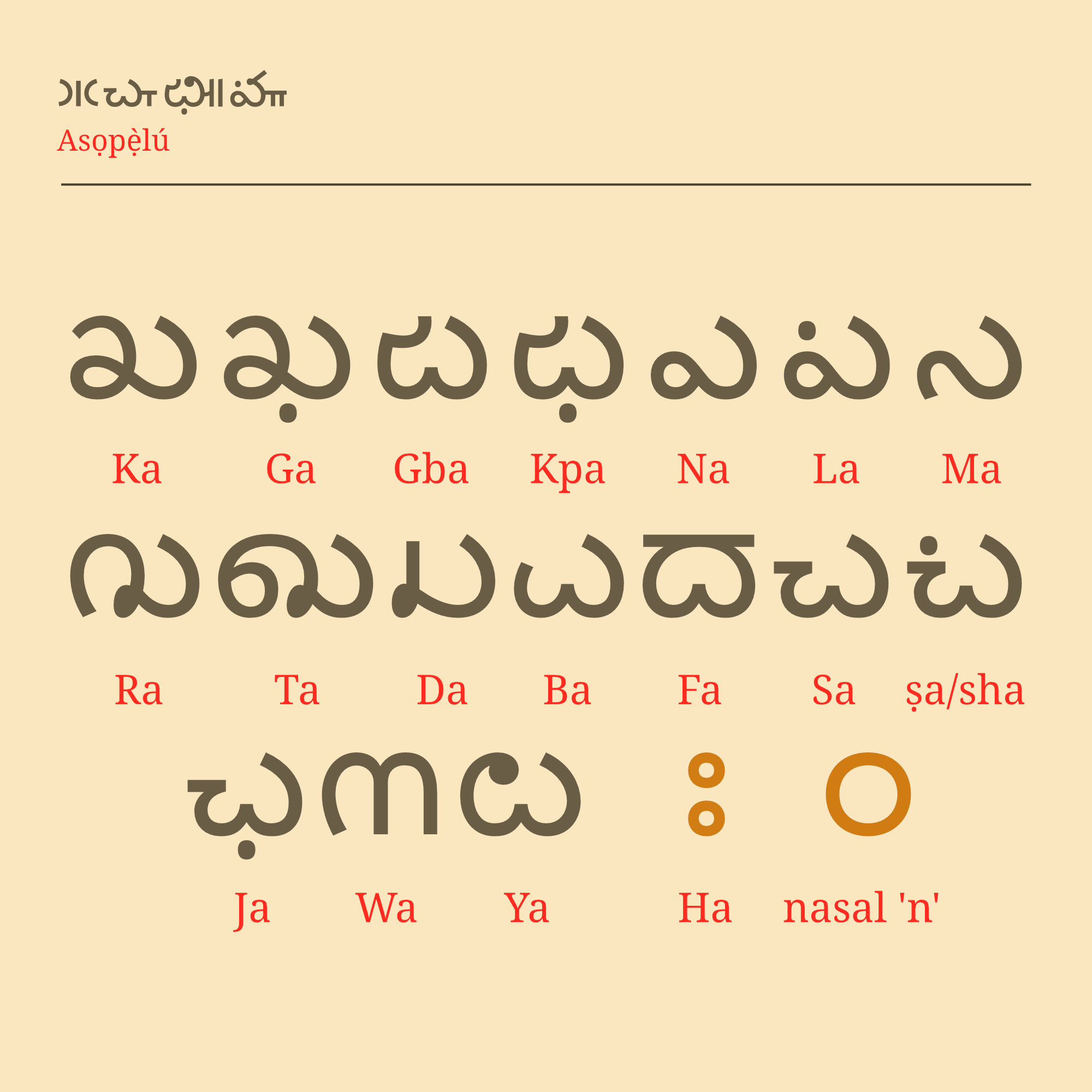
We modify the sounds of the by adding any of the vowels in their post-consonant form thereby forming a syllable.
Except for [ | ha], there are two tonal consonant forms for every other consonant: the rising form, and the falling form, the consonants in their regular form mark the mid tone. The letter [ and | fa and wa] is the only letter different in it’s tonal forms.
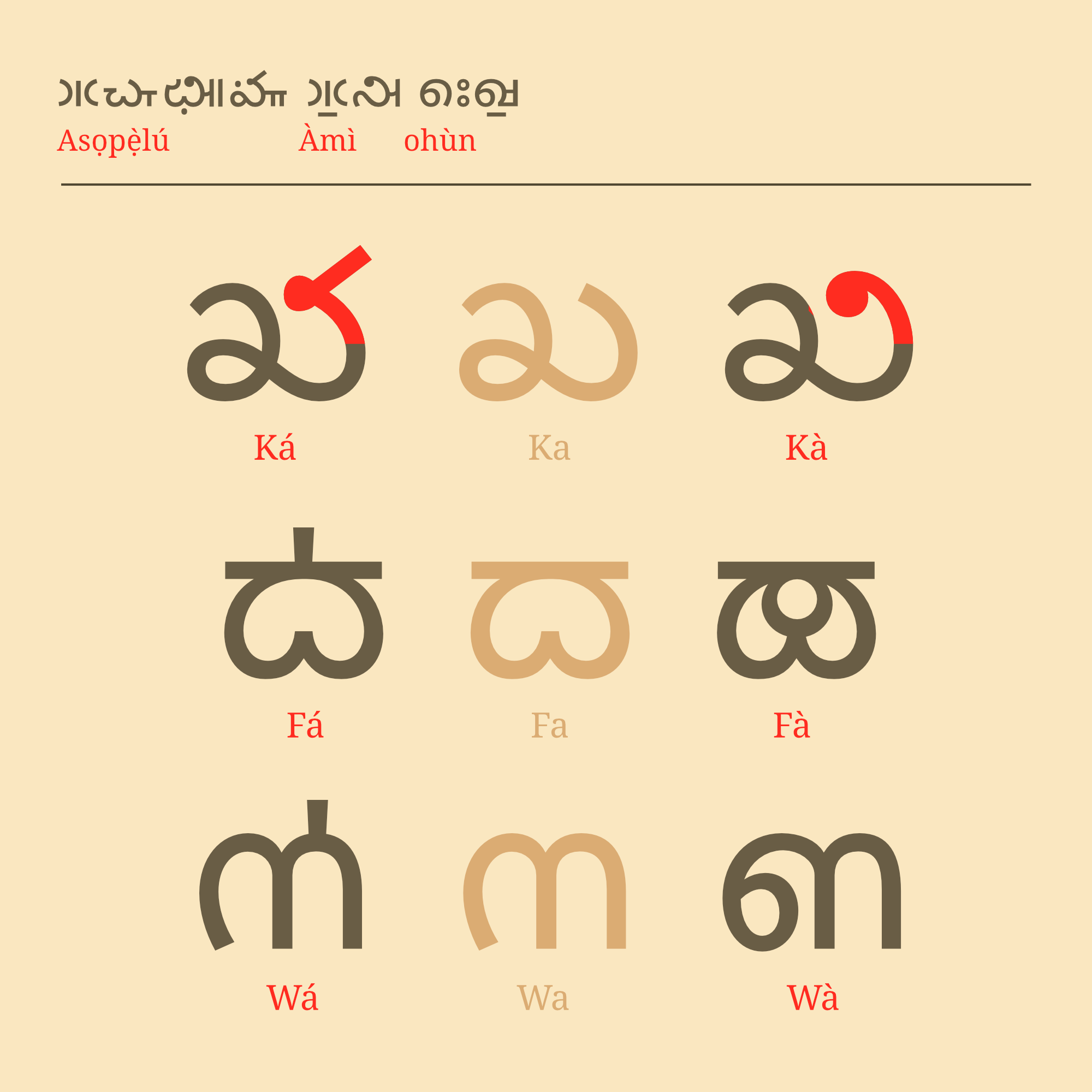
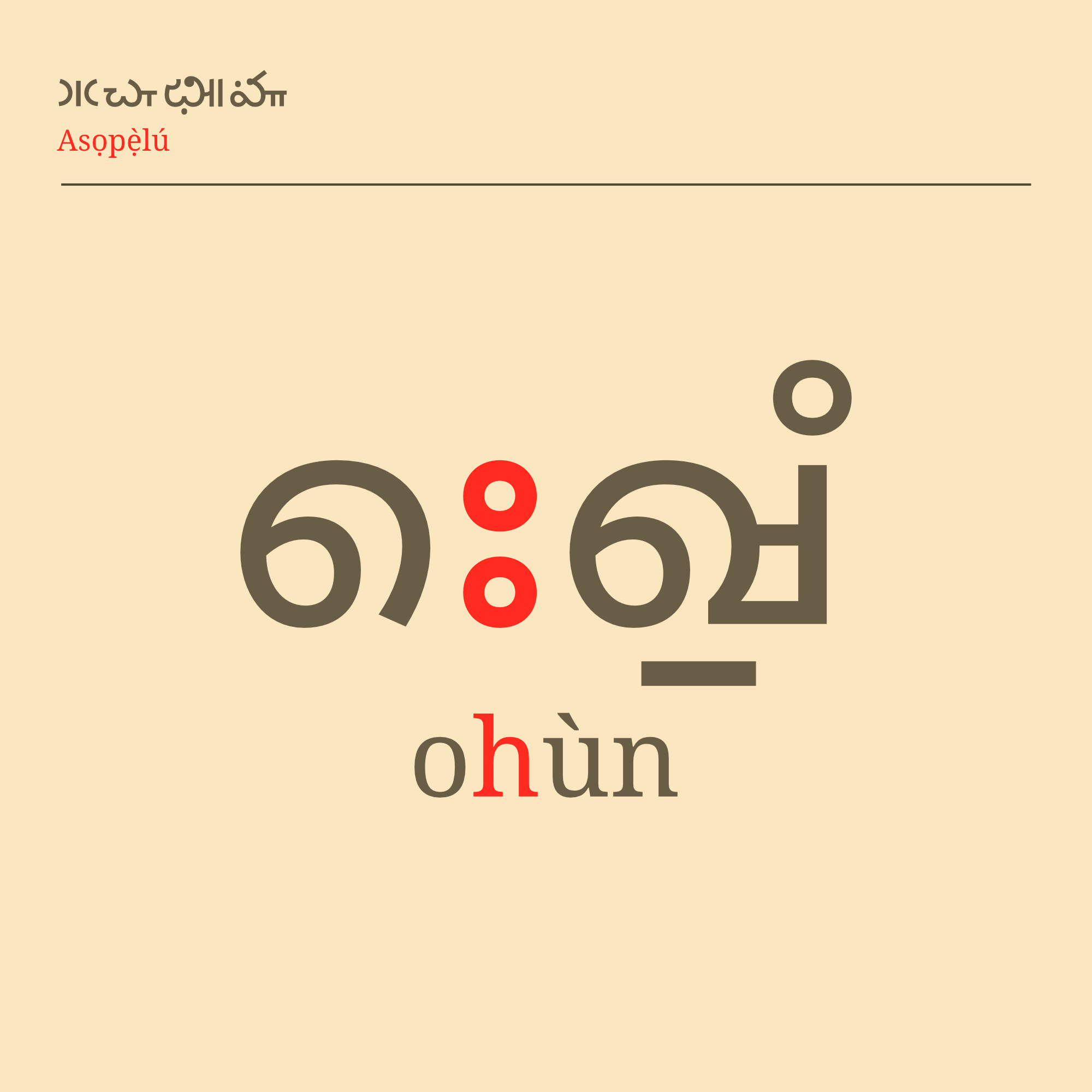
Letter [ | ha] is the only that no vowel can be attached too (the letter still possesses the inherent vowel [a]), the letter functions as an aspirated sound with few use cases in Yoruba. When a vowel is followed after this consonant, the vowel takes it’s independent form.
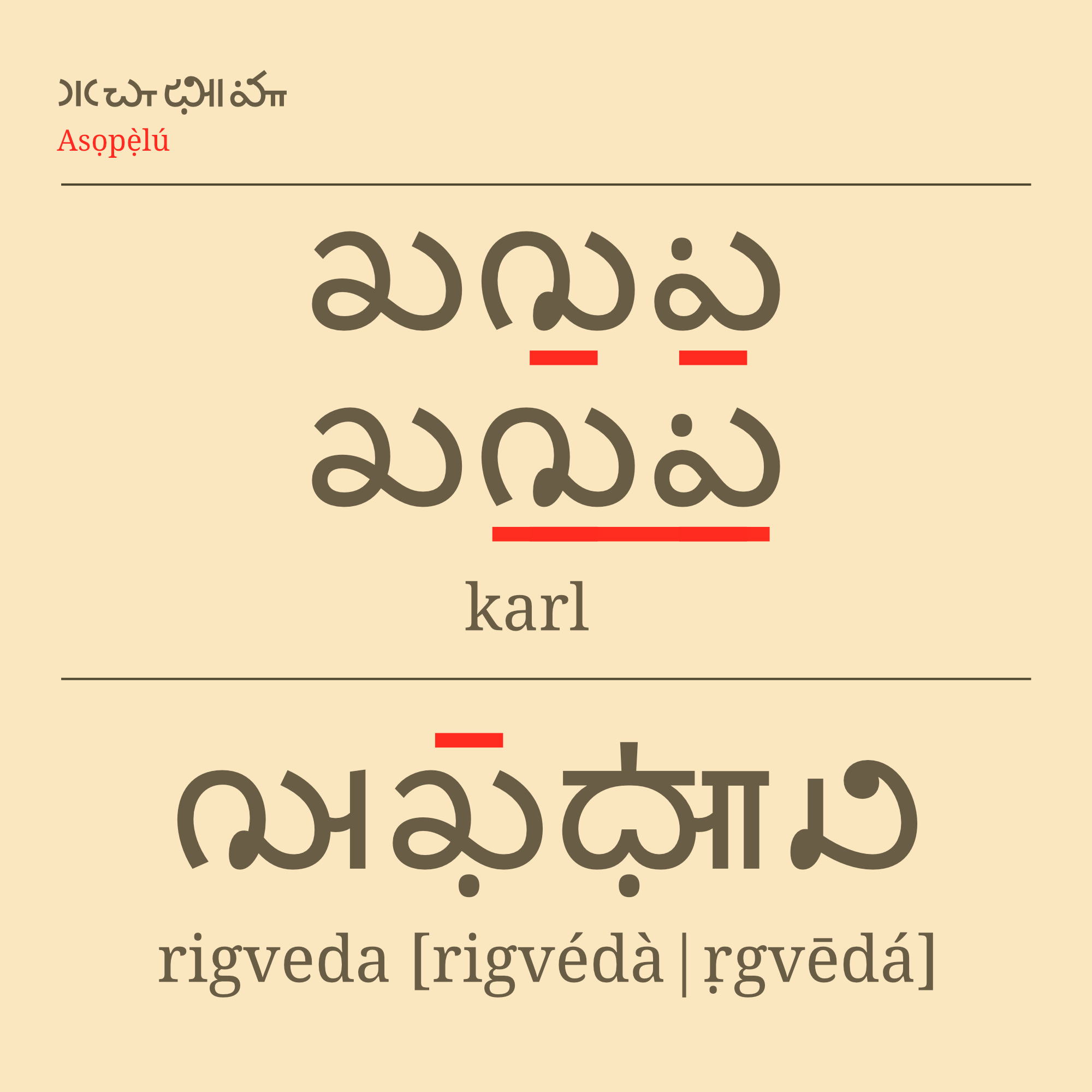
In order to silent the inherent vowel of the , an horizontal line is placed underneath the consonant, or above the consonant if a dot modifier is already present below the letter. (As far as Yoruba is concerned, You should never have to use this because all are followed by a vowel).
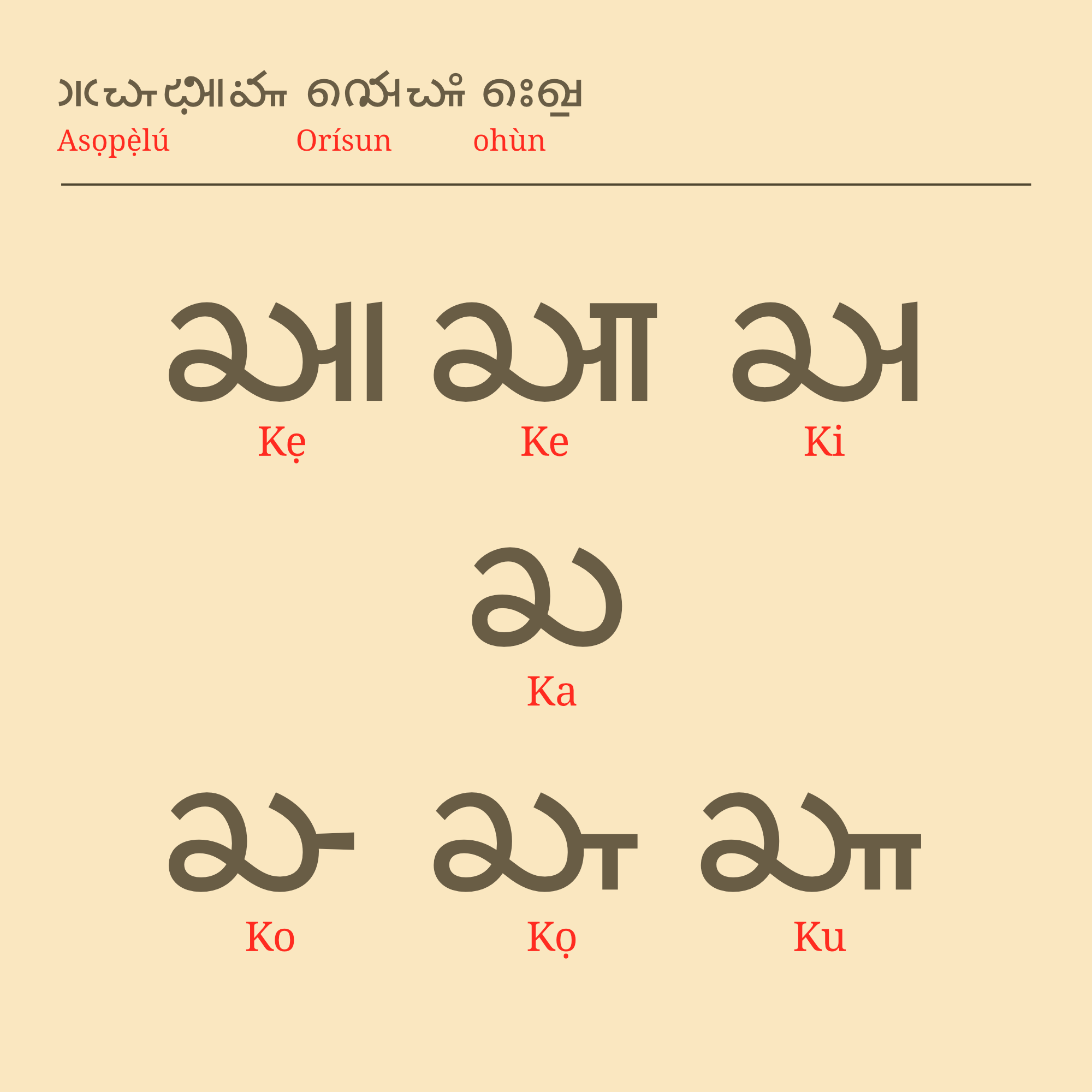
- : | : (Orísun-ohùn/Vowels)
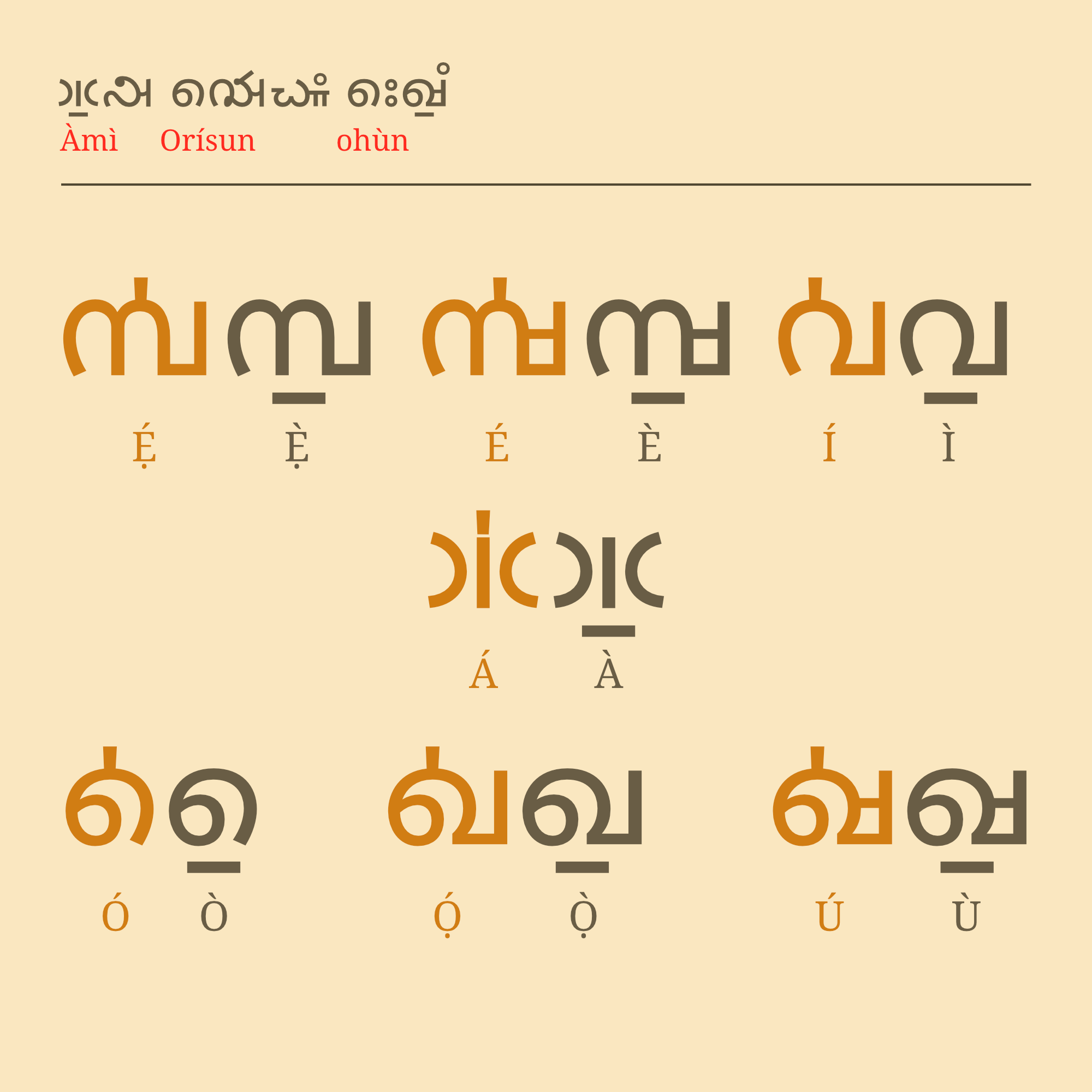
: is roughly translated to “source/beginning sound” in English. The reason we call it : is because these sounds can stand on their own without any other sound, they are always present in whatever word or syllable we say and they are the only sounds that form a complete syllable. In the Kikọ script, we have two : forms; the independent forms, and the post-consonant forms that we write in conjunction with the consonants. All vowels, except for [a] have this dual form.
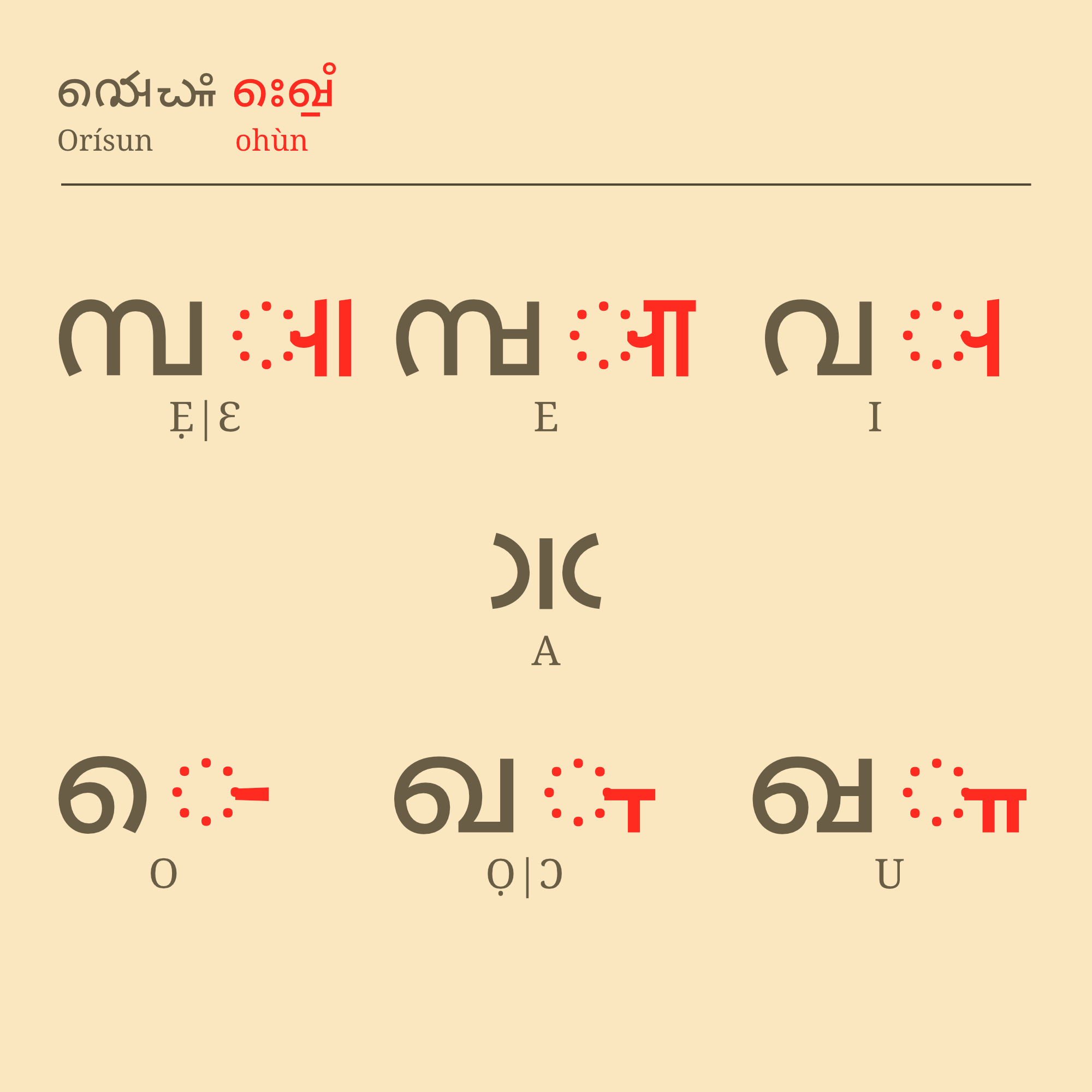
In addition, there are two tonal vowel letter forms - the rising form with a vertical stroke on top of the vowel, and the falling form with an horizontal stroke below the vowel. The tonal vowel forms are only used when the vowel either starts a word, when two vowels occur side-by-side, or after a consonant-vowel pairing (a CVV structure) for example .
- (Àmì ohùn/Tone marks)
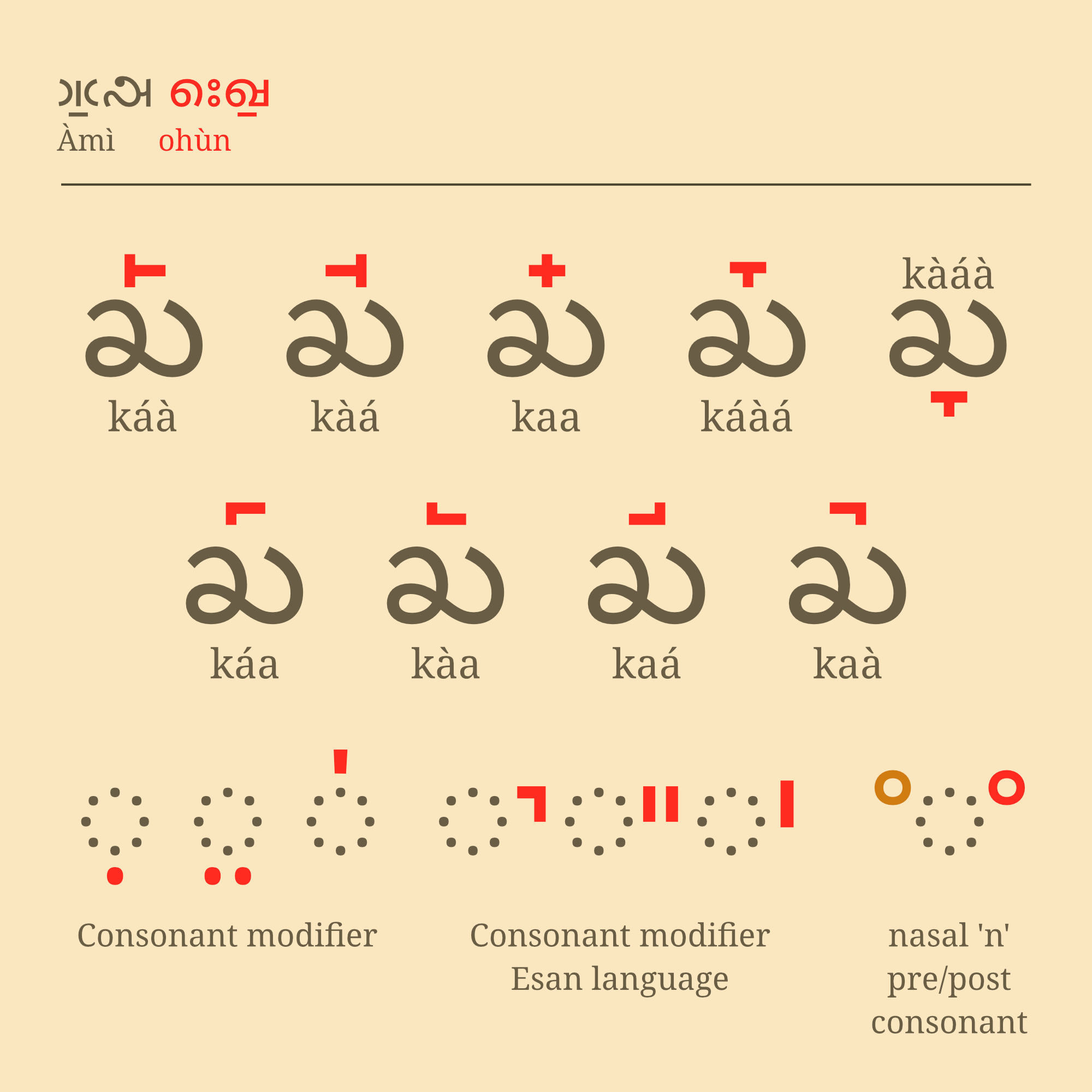
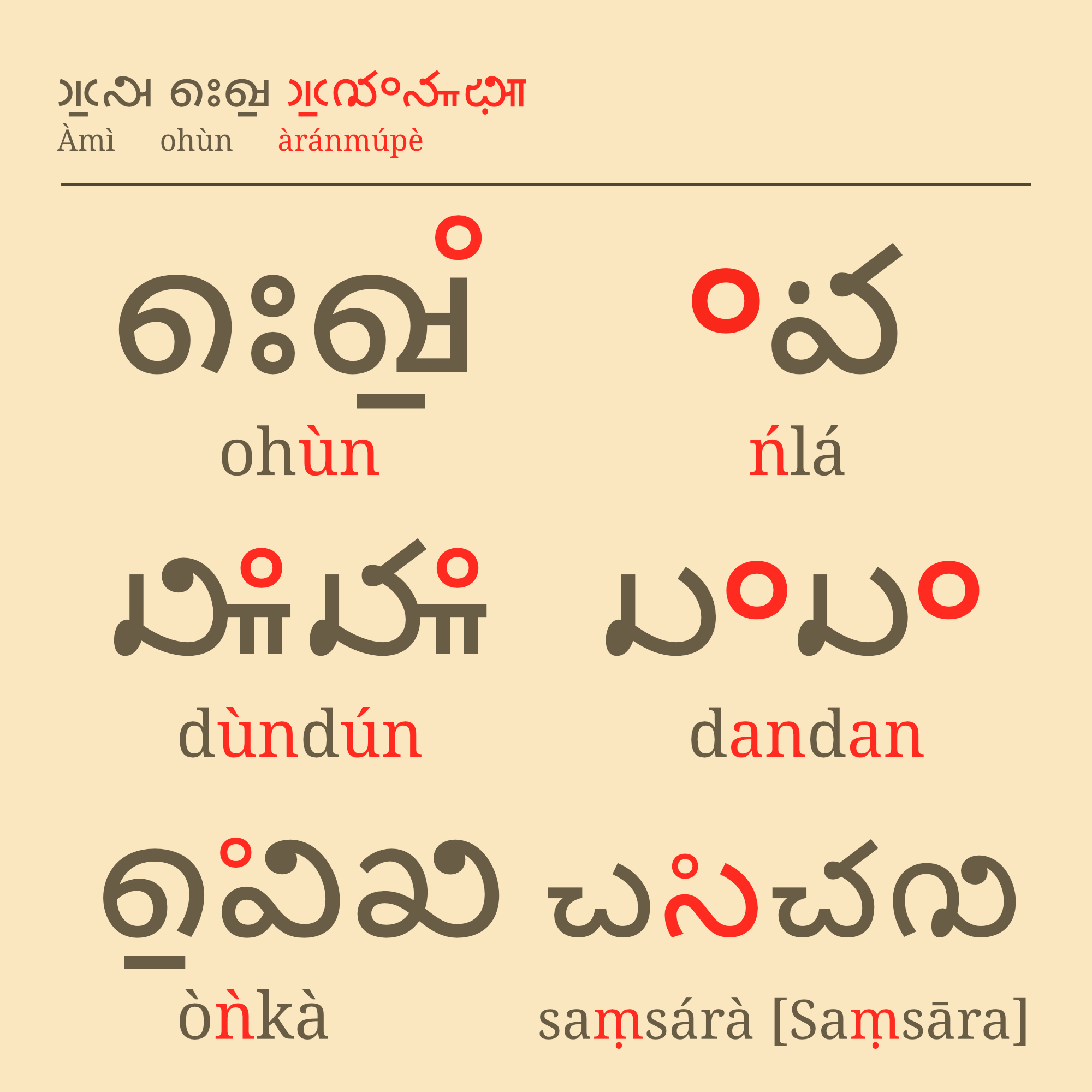
In the Kikọ script, Same vowels (in their independent form) are never written side by side in a word, we use tonal marks to represent the tonal range we are trying to indicate. The purpose of doing this is to make learning tones more intuitive, accurate, and memorable. The nasal tone can either be added to the top of the letter, in front of consonants, after a standalone consonant or an independent vowel (if preceded by the aspirated consonant []), and as a standalone sign if preceded by the vowel , . The tone mark is used as a letter on it’s own to mark the present continuous or present simple tense [ń]. If the tonal mark is placed after the starting vowel letters it assumes the tonality of that vowel (for example | òǹkà, if placed before the nasal tone becomes a falling tone | ǹkan/nǹkan, if placed after it assumes whatever tonality of the letter is | ńlá. In no situation should the be used for marking tonality.
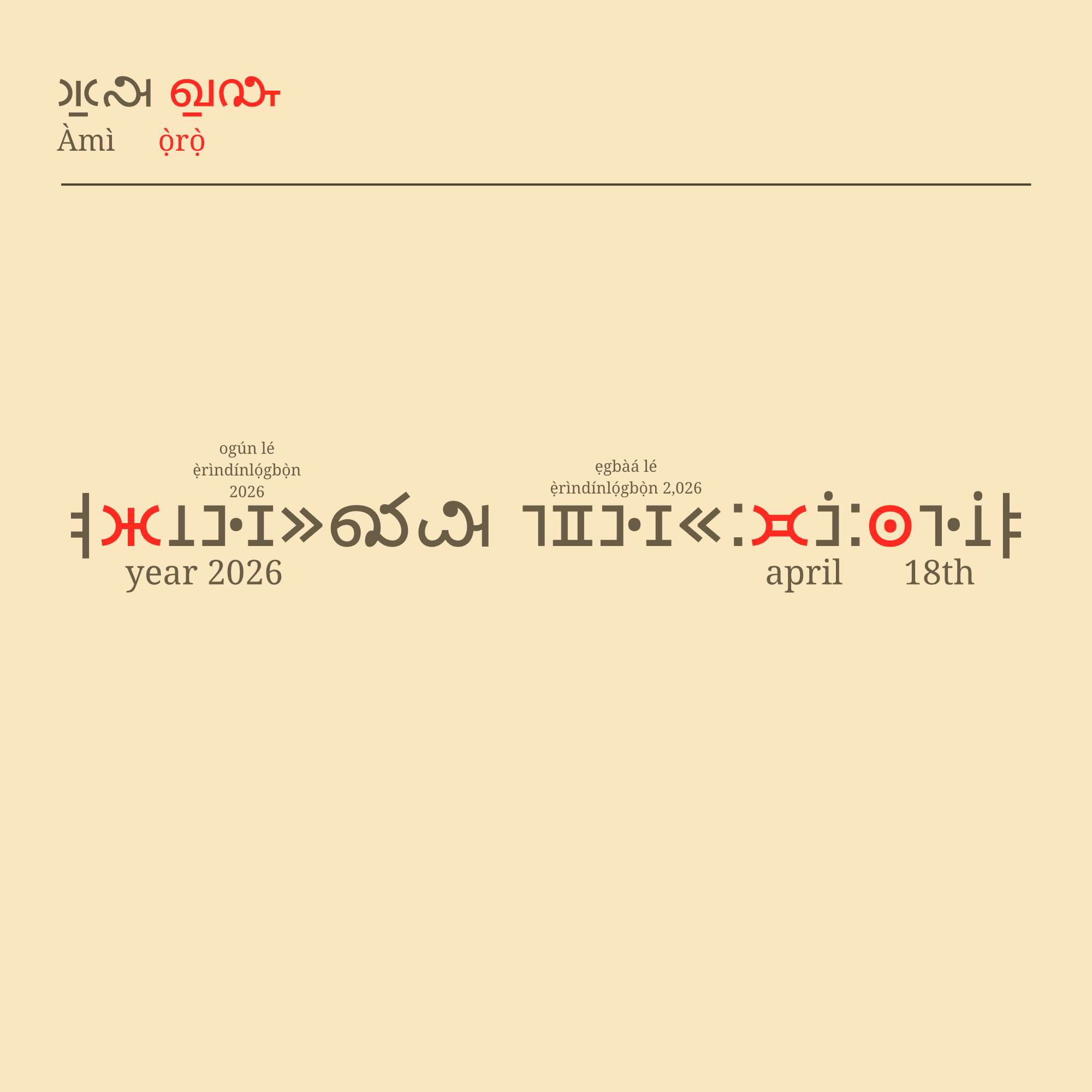
- (Àmì ọ̀rọ̀/Logogram)
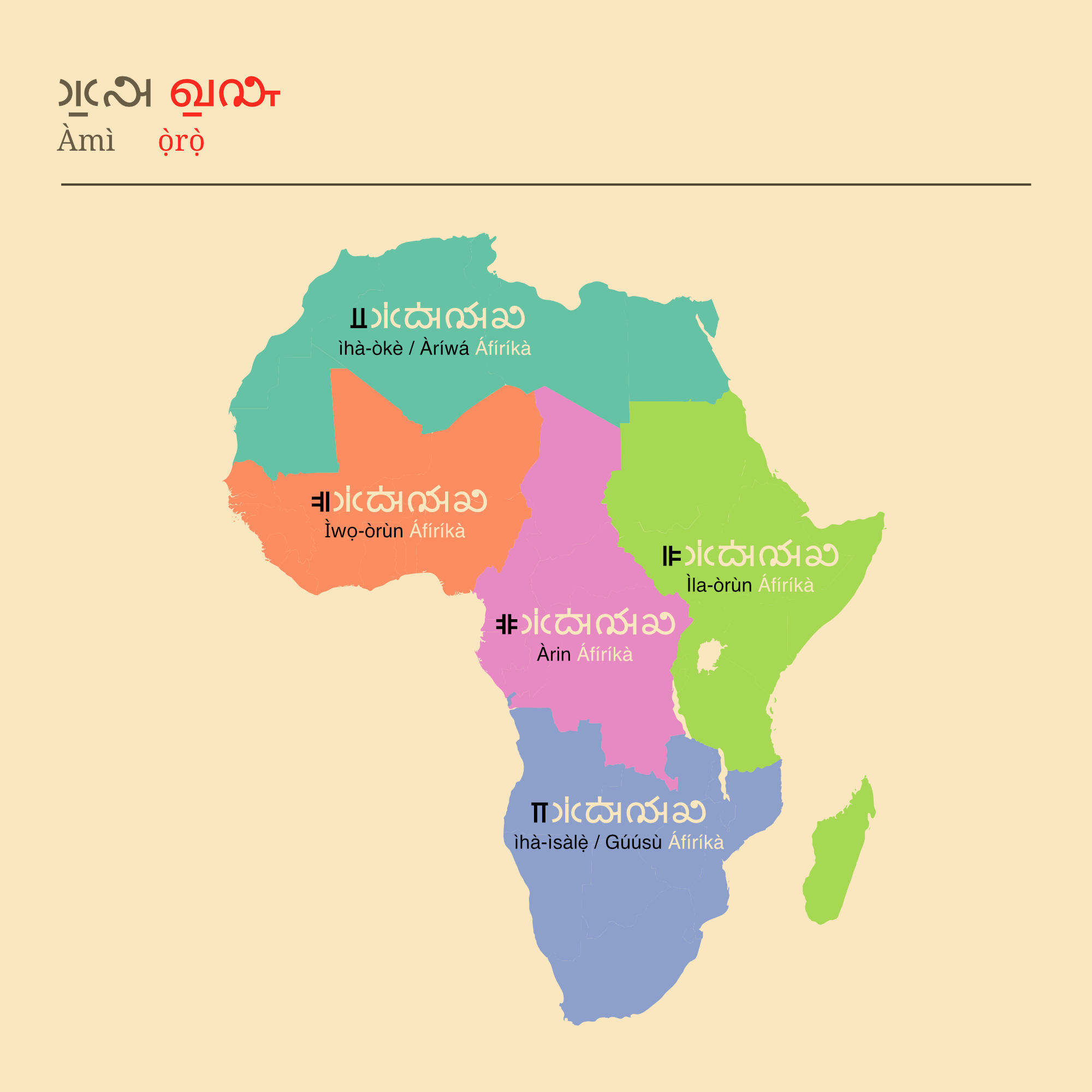
The Kikọ script uses a very small set of logogram for special use cases. The logograms below represent the total amount of logogram created to date.
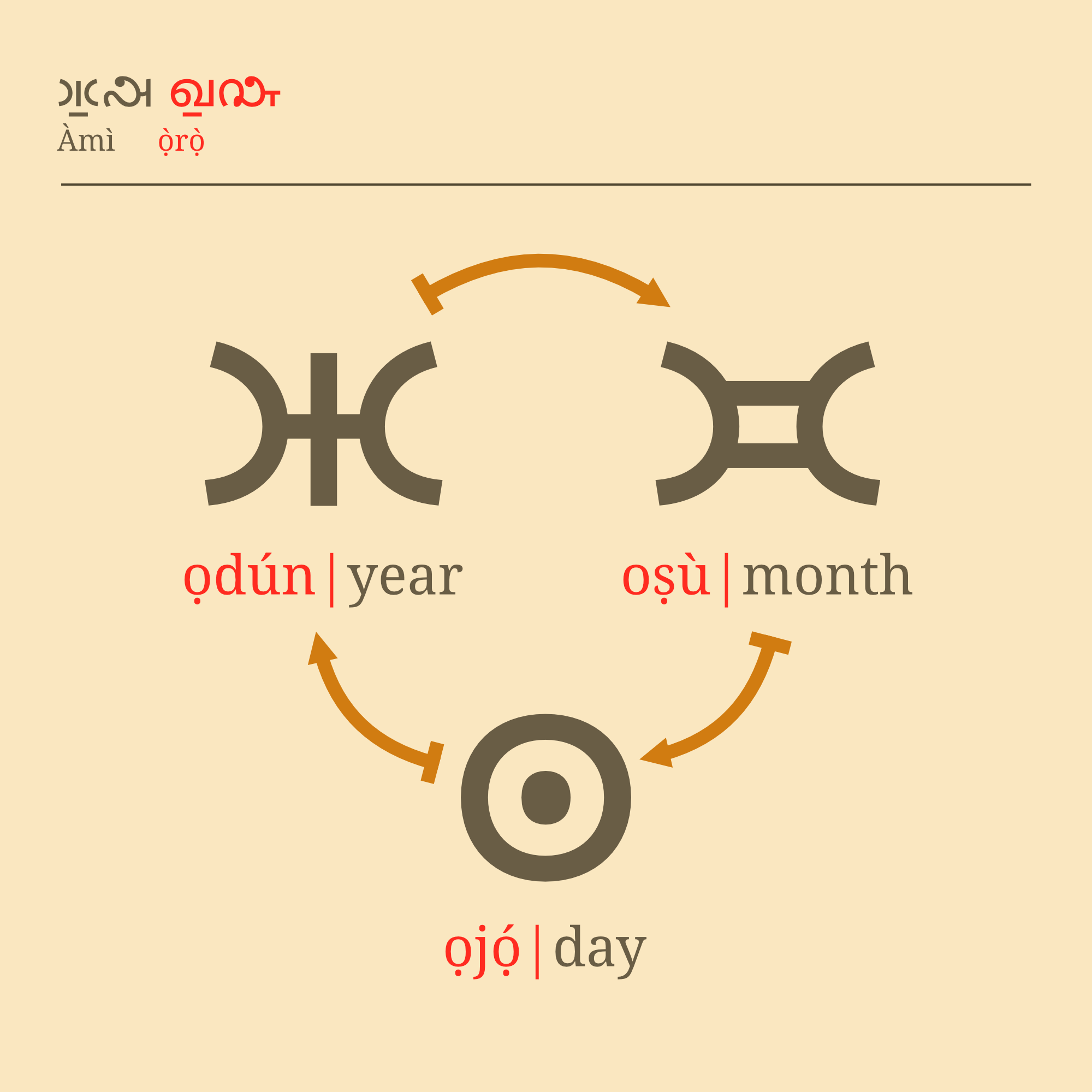
Cardinal direction logogram
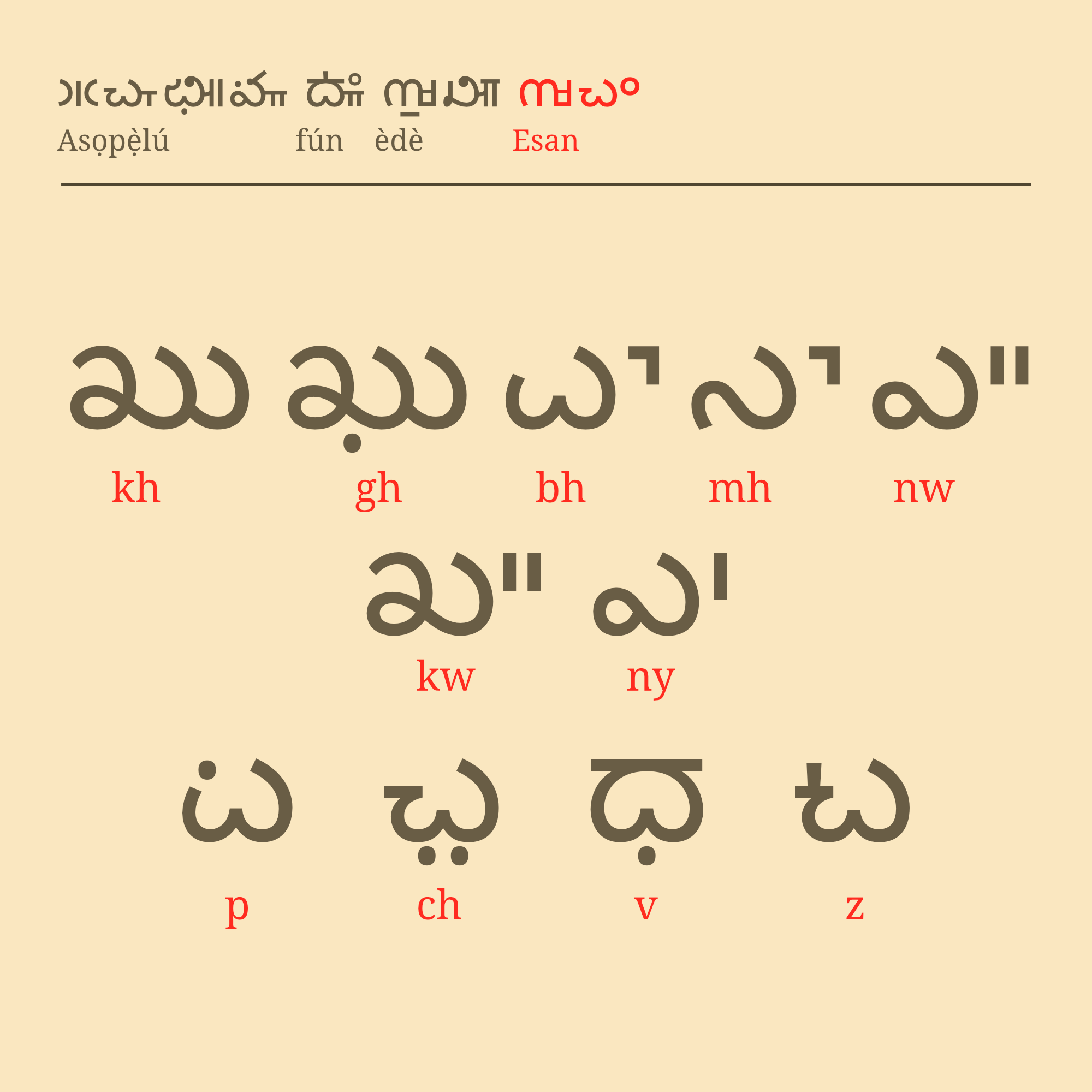
- (Èdè Esan/Esan language)
.
, , ,
.
Esan is a language in spoken in North Central Nigeria (edo state) by the
Esan people. The language has many dialects among which there are Ẹkpoma
(Ekuma), Ebhossa (okhuesan), and Ewu.